Beat the Moisture: Smart Dehumidifier Setup for Healthier Basements
Prevent mold and protect your belongings with proper moisture control installation
The musty smell that creeps into basements during humid fall weather isn't just unpleasant – it's a warning sign that moisture levels are creating the perfect breeding ground for mold and mildew. Installing a dehumidifier before humidity becomes a problem is one of the smartest investments you can make in your home's health and your family's comfort. A properly positioned dehumidifier doesn't just remove excess moisture; it protects stored belongings, prevents structural damage, and creates cleaner air throughout your entire home. The key is understanding that effective moisture control goes beyond just plugging in a unit – it requires strategic placement, proper drainage, and ongoing monitoring to maintain that sweet spot of 30-50% relative humidity. With the right setup, you'll transform your basement from a damp storage area into a dry, usable space that adds real value to your home.
Equipment & Materials
- Basement-sized dehumidifier - 50-70 pint capacity for most spaces ($200-400)
- Digital hygrometer - To monitor humidity levels accurately ($10-20)
- Drainage hose - 6-10 feet for continuous water removal ($8-15)
- Floor drain or sump pump - For permanent water disposal
- Extension cord - Heavy-duty, moisture-resistant if needed ($15-25)
- Condensate pump - If draining upward is required ($50-100)
- Level tool - Ensures proper unit positioning
- Basic tools - Screwdriver, drill for mounting brackets if needed
Installation Steps
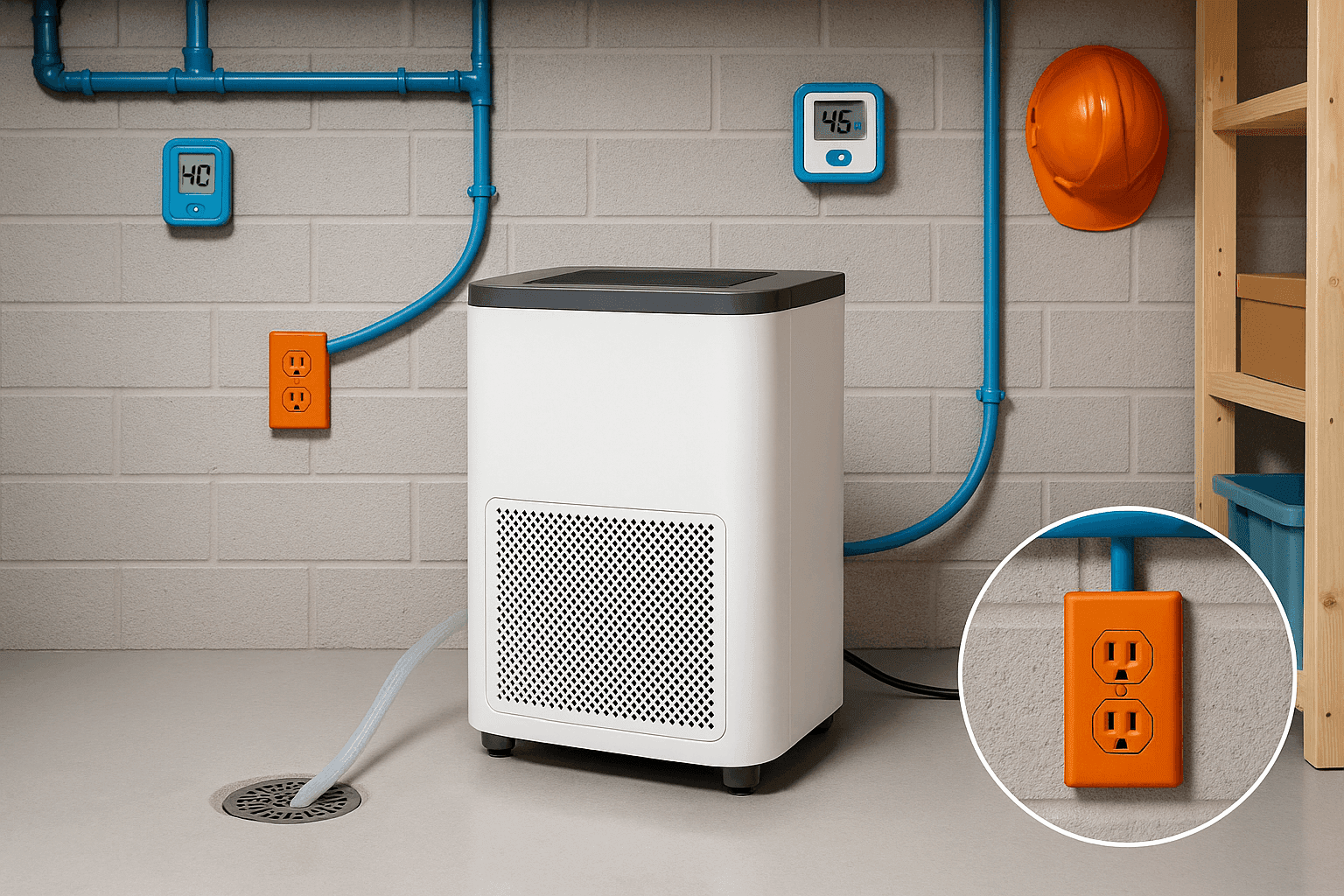
- Choose central location away from walls with at least 6 inches clearance on all sides
- Check that floor is level and can support unit weight when water tank is full
- Position near electrical outlet and drainage option, avoiding direct sunlight or heat sources
- Connect drainage hose to unit's outlet port, ensuring secure, leak-proof attachment
- Route hose to floor drain, sump pump, or utility sink with slight downward slope
- Plug unit into properly grounded outlet, preferably GFCI-protected for safety
- Set target humidity to 45% and allow 24 hours for initial moisture removal
- Monitor operation and adjust settings based on seasonal humidity changes
Size your dehumidifier based on both square footage AND moisture level – a moderately damp 1,500-square-foot basement needs a 50-pint unit, while the same space that's very damp requires 70 pints of daily capacity. Install a smart outlet timer to run the unit during off-peak electricity hours if your utility offers time-of-use pricing. For maximum efficiency, position the unit where air can circulate freely – never in corners or against walls where airflow gets restricted. Remember that dehumidifiers work harder in cooler temperatures, so consider a model with low-temperature operation if your basement stays below 65°F during winter months.