Basket Case: Upgrade Dollar Store Planters for $4
A $1 hanging basket, a coat of spray paint or a coconut coir liner, and a few decorative touches — the porch planter that looks $25 and costs about $4
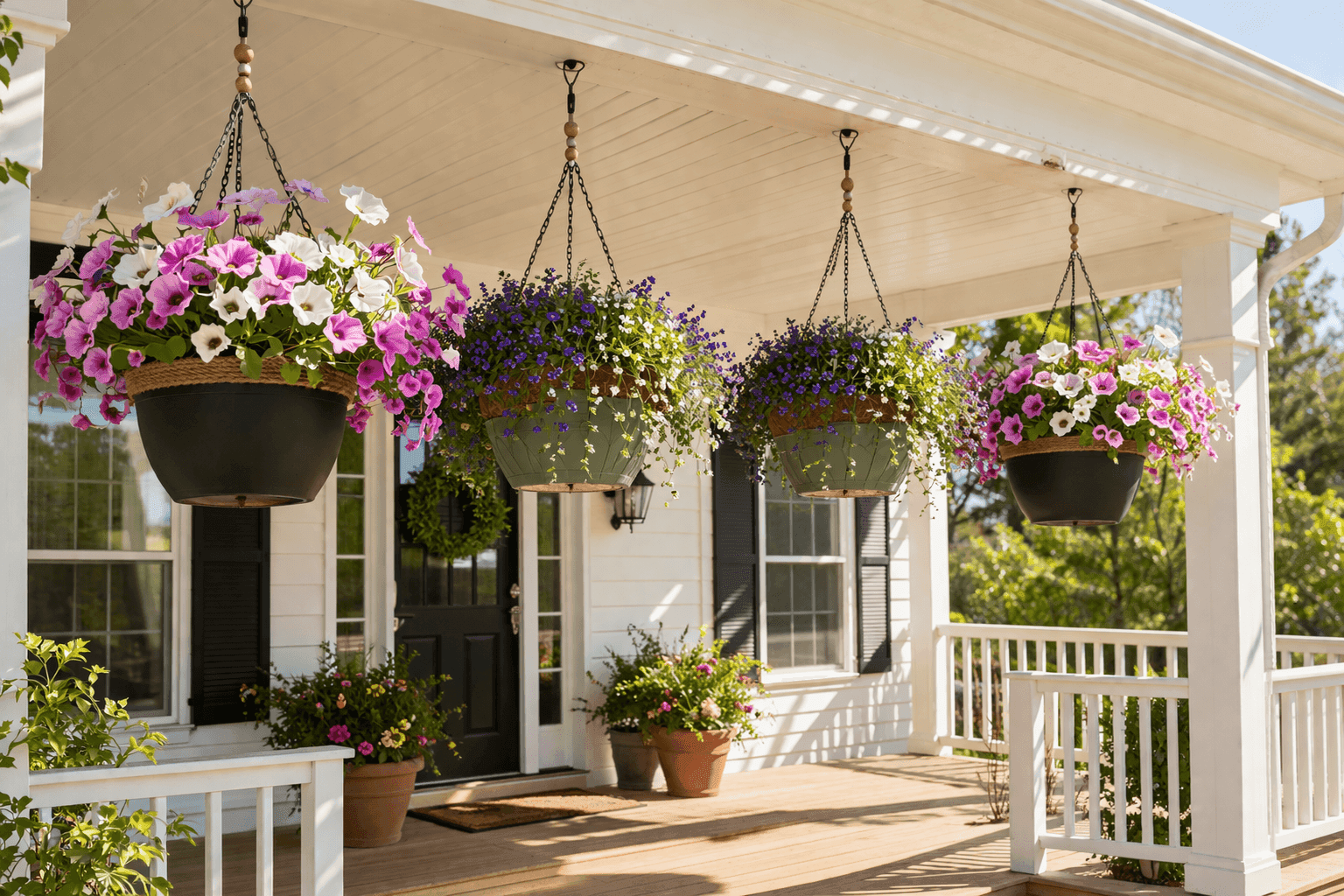
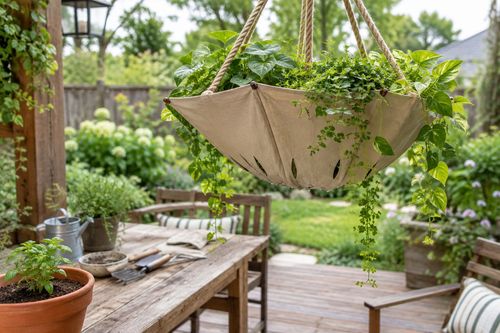
A row of matching hanging baskets overflowing with trailing flowers is one of the fastest and most impactful porch upgrades available — and the version from a garden center that looks exactly the way you want it to look costs $20–$30 per basket before you've put a single plant in it. The dollar store version costs $1–$2 per basket and looks identical after about fifteen minutes of upgrading per basket. A coat of outdoor spray paint in matte black, sage green, or terracotta transforms a plain plastic basket into something that reads as a deliberate finish choice; a coconut coir liner fitted into a wire basket and jute rope wrapped around the rim adds the textural richness that separates a casual basket from a styled one. Make four to six in a coordinating color palette, fill them with trailing petunias or lobelia, and hang them at consistent heights along the porch — the collective effect of a matched set is dramatically greater than any single basket and costs about $20 total for what a garden center would charge $100–$150 for. This is the Thrifty Tuesday win that makes your porch look like you spent real money on it without spending real money on it.
What You'll Need
- The Baskets
- Wire hanging baskets — the open wire construction holds a coir or moss liner beautifully and produces the most natural, high-end look of any basket type once lined and planted. Available at dollar stores and discount stores for ~$1–$2 each in 8 and 10-inch sizes
- Plastic hanging baskets as an alternative — take spray paint beautifully and require no liner since the solid base retains soil naturally. More durable than wire for windy porch locations where wire baskets can twist and tangle in strong wind
- Buy all baskets for a porch display from the same store in the same trip to guarantee identical size, chain length, and hook style — even small variations in basket dimensions or chain length produce a mismatched look in a side-by-side porch display that undermines the coordinated aesthetic
- Liner Options for Wire Baskets
- Pre-cut coconut coir liner sheets sized for your basket diameter — available at garden centers and Amazon for ~$1–$2 per liner. Coir liners fit into wire baskets easily, hold soil and moisture effectively, and have a rich natural brown texture that looks genuinely premium against the wire basket structure
- Sheet moss pressed against the wire basket interior as a free or very low-cost liner alternative — collect from your own yard or purchase dried sheet moss at a craft store for ~$4–$6 per bag that lines many baskets
- Burlap cut into a circle and pressed into the wire basket, secured with a few twists of floral wire where the burlap overlaps at the basket sides — free if you have burlap scraps, or ~$3–$4 per yard at a fabric store. Burlap liners have a rustic, textural quality that pairs beautifully with neutral paint colors and natural fiber decorative accents
- Paint & Decorative Upgrades
- Outdoor spray paint in your chosen color — matte black for a sophisticated modern look, sage green for a garden-blending natural aesthetic, terracotta for warm Mediterranean character, or dusty blue for a cottage-style display. One can covers four to six baskets — ~$6–$8 per can of Rust-Oleum 2X or Krylon outdoor formula
- Jute rope or natural twine for wrapping around the basket rim — hot glue the rope in tight rows around the top 1–2 inches of the basket rim for a textural detail that reads as a deliberate design choice and hides any rough paint edges at the basket top — ~$3–$4 per spool that wraps many baskets
- Wooden beads threaded onto the hanging chain — slide three to five large wooden beads onto each chain section for a bohemian decorative detail that adds warmth and visual interest to the hanging hardware — ~$3–$4 for a pack of mixed wooden beads at a craft store
- Ribbon woven through wire basket sides in a coordinating color — thread a length of ¼-inch ribbon in and out through the wire grid around the basket circumference for a woven texture that photographs beautifully — ~$2–$3 per spool
- Plants & Soil
- Trailing annuals for maximum impact — wave petunias, lobelia, bacopa, million bells (calibrachoa), sweet potato vine, and trailing ivy all cascade beautifully from hanging baskets and fill in quickly for a full, lush look within two to three weeks of planting — ~$2–$4 per plant, three to four plants per basket
- Lightweight potting mix specifically formulated for containers — not standard garden soil, which is too heavy for hanging baskets and causes the chain to strain under the combined weight of soil and water — ~$6–$8 for a small bag that fills several baskets
- Slow-release fertilizer granules mixed into the potting soil at planting time — hanging baskets dry out and deplete nutrients faster than ground plantings and benefit significantly from the continuous feeding that slow-release granules provide
How to Upgrade Them
- Paint plastic baskets before adding any liner or decorative elements — spray paint all plastic baskets in a single session before doing anything else, applying two thin coats with full drying time between them and holding the can 10–12 inches from the surface for even coverage without drips. Painting bare plastic before assembly is significantly easier than trying to mask and paint around already-installed decorative elements, and the paint adheres most reliably to clean, undecorated plastic surfaces.
- Fit the liner into wire baskets by pressing a pre-cut coir liner or a circle of sheet moss firmly against the interior wire surface, shaping it to follow the basket curve all the way from the base to the rim. The liner should sit snugly against the wire on all sides without gaps where soil would push through — press firmly around the full interior circumference so the liner material contacts every wire section rather than bridging across gaps with unsupported spans that collapse under soil weight.
- Apply the jute rope rim detail by squeezing a thin bead of hot glue along the top 1-inch band of the basket exterior, pressing the jute rope firmly against the glue immediately and holding for five seconds, then continuing around the full circumference in tight, touching rows until the desired rim width is covered. Work in 4–6 inch sections so the glue doesn't set before the rope is pressed — hot glue that has cooled before the rope contacts it doesn't bond the rope securely enough to survive outdoor weathering and handling.
- Thread wooden beads onto the hanging chain by opening each chain link slightly with needle-nose pliers, sliding the bead onto the link, and closing the link again — or simply thread the beads onto the chain by stringing them between existing links if the chain links are large enough to pass through the bead holes. Space beads evenly along each chain section rather than clustering them near the top or bottom, and use an odd number per chain section for the most visually balanced distribution.
- Fill each basket with potting mix blended with a handful of slow-release fertilizer granules, filling to 2 inches below the rim to leave planting headspace. For wire baskets with liner, firm the potting mix gently against the liner sides so no air pockets form between the soil and the liner material — air pockets cause the liner to collapse inward when the soil settles after the first watering, which produces a dimpled, uneven basket profile that's difficult to correct after planting.
- Plant three to four trailing plants per basket positioned toward the basket edge rather than the center so they cascade outward and downward over the basket sides from the very first week. Space plants evenly around the basket perimeter, press each root ball firmly into the potting mix, and fill any gaps between root balls with additional potting mix so no liner or wire is visible through the planting from any angle after the plants are installed.
- Water each planted basket thoroughly and let it drain completely before hanging — a freshly watered hanging basket is significantly heavier than an empty one, and confirming the hanging hardware supports the loaded weight before walking away is the check that prevents a falling basket from damaging plants, the porch surface, or anything beneath it. Hang all baskets at the same height from the porch ceiling for maximum visual impact — a consistent hanging height turns individual baskets into a unified display, while varied heights produce a casual, uncoordinated look regardless of how well each individual basket is planted and styled.
- Water daily in warm weather — hanging baskets dry out significantly faster than ground plantings because air circulation around the full basket exterior accelerates moisture loss from all sides simultaneously. Check moisture by pressing a finger into the soil surface each morning; a basket that's dry to an inch depth needs water immediately. Consistent daily watering during the first two weeks of establishment produces the root development that allows plants to tolerate brief dry periods later in the season without stress.
Garden designers who create porch and entrance displays for residential and commercial properties use a planting technique called thriller-filler-spiller that produces the most visually full and dynamic hanging basket result from the fewest number of plants — and it works just as well in a $4 upgraded dollar store basket as in a $30 garden center premium. The thriller is one slightly taller, upright plant in the center of the basket that adds height and visual interest above the basket rim — a small ornamental grass, an upright salvia, or a spike plant. The fillers are two to three mounding plants that create the main body of the planting — compact petunias, calibrachoa, or diascia. The spillers are one to two trailing plants positioned at the basket edge that cascade down over the basket sides — bacopa, lobelia, or trailing sweet potato vine. The three-type combination produces a basket with height, body, and cascading movement simultaneously — a visual quality that even the most generously planted single-variety basket can't match, and that makes a $4 upgraded dollar store basket look like a professionally planted $35 statement piece in every photo and from every viewing angle on the porch.