Architectural Elegance: DIY Wood Corbels
Transform basic lumber into stunning decorative brackets that add instant sophistication
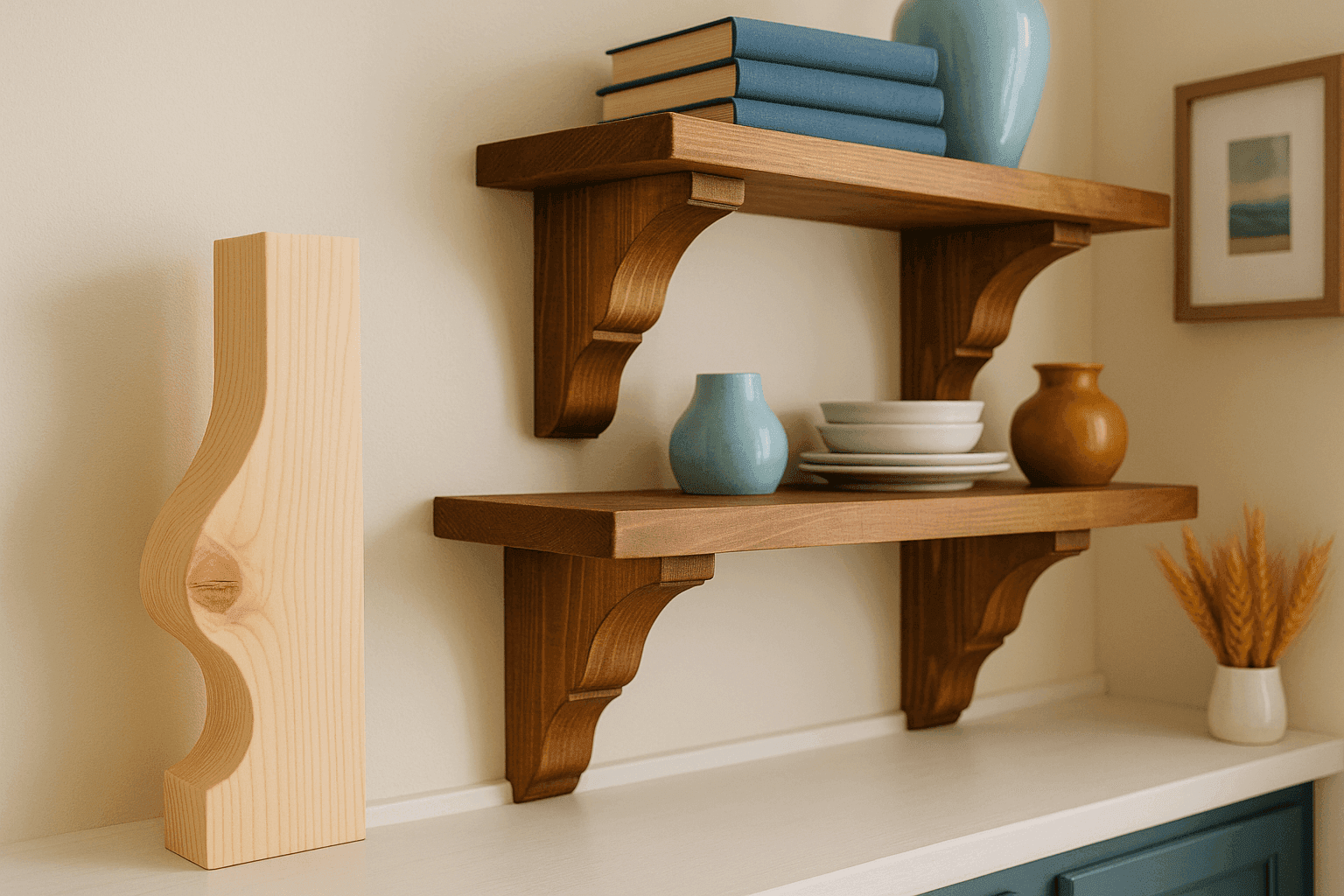
Corbels are one of those architectural details that immediately elevate a space from ordinary to custom-designed, but store-bought decorative brackets can cost $25-75 each for anything decent-looking—and that adds up fast when you're trying to support multiple shelves or create a cohesive look. Making your own corbels from basic 2x4 or 2x6 lumber costs about $5-8 per bracket and gives you complete control over the size, style, and finish to perfectly match your space. The real satisfaction comes from using a simple jigsaw to transform plain lumber into elegant architectural elements that look like they were crafted by a professional woodworker. These custom brackets prove that adding sophisticated design details doesn't require expensive millwork—just some creativity, basic tools, and the confidence to cut curves that transform functional support into decorative art.
Materials & Tools
Lumber & Hardware ($5-8 each)
- 2x4 or 2x6 lumber (pine or cedar work well)
- Calculate length: shelf depth + 2 inches
- Wood screws for mounting (3-inch)
- Sandpaper (120 and 220 grit)
Finishing Supplies ($10-15)
- Wood stain or paint to match decor
- Polyurethane finish for protection
- Foam brushes or lint-free rags
- Drop cloth for workspace
Essential Tools
- Jigsaw with wood-cutting blades
- Drill with bits
- Pencil and paper for templates
- Measuring tape and square
- Clamps for securing work
Crafting Your Custom Corbels
- Design your corbel shape on paper first, considering both aesthetics and structural support needs
- Transfer the template to your lumber, ensuring the grain runs vertically for maximum strength
- Mark mounting points where the corbel will attach to wall and shelf support
- Cut the basic L-shape using a circular saw for straight edges, leaving decorative curves for the jigsaw
- Shape decorative curves with the jigsaw, cutting slowly for smooth lines and minimal tear-out
- Sand all surfaces starting with 120 grit, then 220 grit for a furniture-smooth finish
- Apply stain or paint in thin, even coats, allowing proper drying time between applications
- Install using pilot holes and screws, ensuring level placement and solid wall attachment
Create a paper template first and test it in place before cutting expensive lumber—you can adjust proportions and curves until they look perfect. For consistent results when making multiple corbels, use your first successful piece as a template for tracing the rest. Consider the visual weight of your corbels relative to what they're supporting—delicate shelves look best with refined, slender brackets, while chunky floating shelves can handle more substantial, bold designs. Always orient the wood grain vertically for maximum structural strength.